Episode Transcript
[00:00:00] Showing up regularly, even when it doesn't look pretty, even when you feel like shit sometimes.
[00:00:07] Can we show up when we're feeling high and when we're feeling low? Can we show up when there's a lot going on in the world? Can we show up when there's a lot going on in our personal lives? Can we find this sense of discipline in our posture, in our breath? Can we find that in this 45 minutes, 1 hour, 90 minutes on the mat? Can we show up with enthusiasm even when things are hard, with commitment and with this willingness to put forth the effort that is needed?
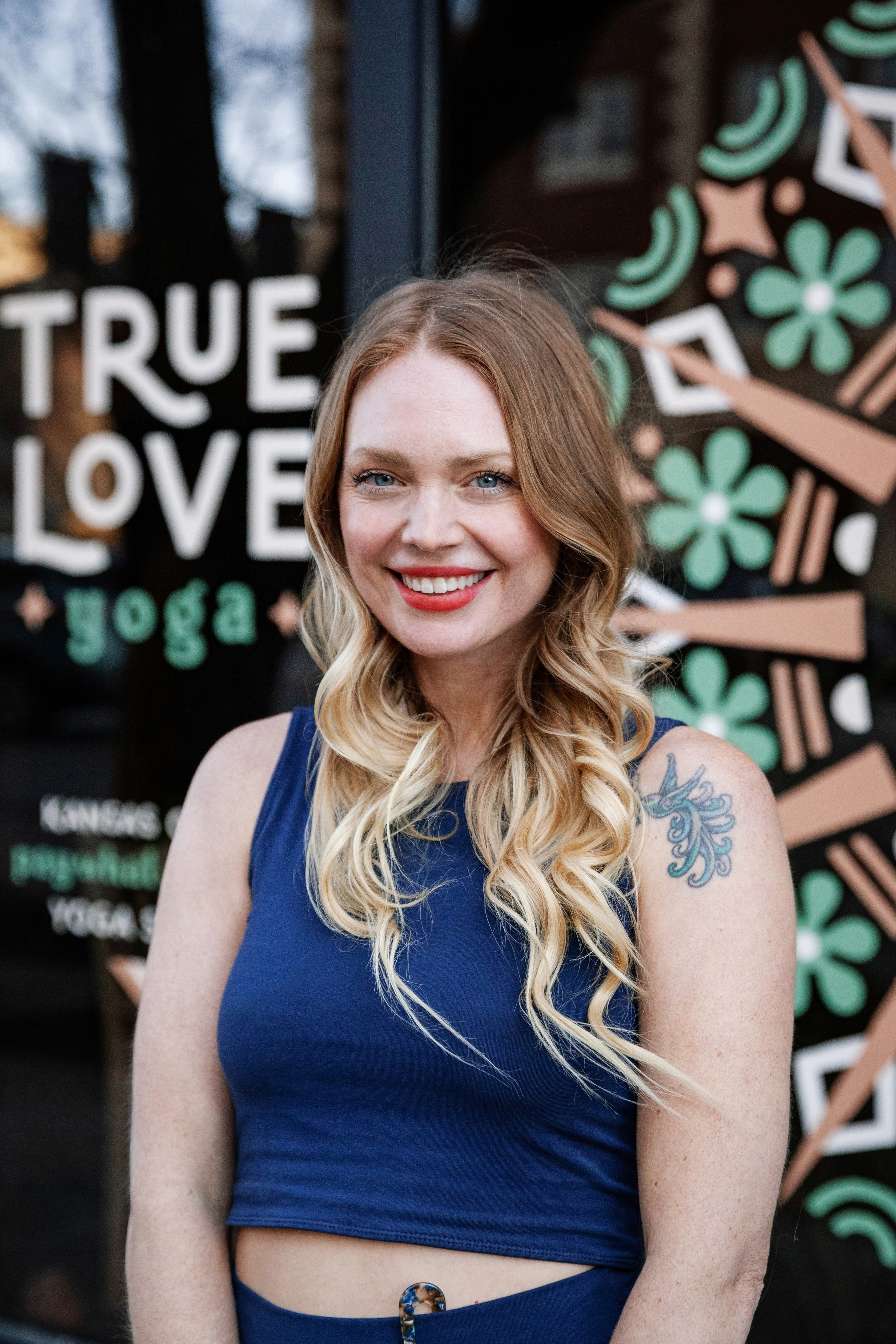
[00:00:53] Welcome to Deepen youn Yoga Practice. I'm Lauren leduc, the owner and founder of True Love Yoga in Kansas City, Missouri. And today we'll deepen our yoga practices by talking about two really important concepts or polarities within yogic philosophy, which are abiasa and viragia or discipline and letting go practice and acceptance. For a long time in my life I was an all or nothing person. It's been one of my biggest flaws and lessons to learn.
[00:01:26] I'm either all in or completely out. This caused a lot of issues, especially as a young adult because I had a very difficult time finding consistency in my life. I would go all in on something, maybe burn out and then disappear for a while. So it was hard to master skills, it was hard to maintain long term relationships and it was difficult to build a sense of self trust because. Because when I was in go mode I knew that anytime it could end and when I was in a more depressed or nothing mode, it kind of felt like the other side of the coin would never flip. So it was a very difficult place to be. But through my yoga practice I have really transformed and I know that comes with maturity too. Over the last couple of decades I have become more consistent. I've lived at like a 7 instead of a 1 and 10 and. And I've been able to really embody these yogic concepts and apply them not only to my practice but to my life. So let's dive into what these are and how they might help give you a steady and sustainable rhythm for practice in life. So abiasa and viragia are rooted in Yoga Sutra 1:12 and it says the fluctuations of the mind are stilled through practice and non attachment. And sometimes we might call this non attachment acceptance. So abiasa is consistent, committed and sustained effort. It is our practice. And vairagya is detachment, dispassion, acceptance of the present moment and the ability to let go, to surrender. So these Two, in order to work, have to exist together and balance each other. One without the other creates the imbalance that I spoke of in my life earlier, this all or nothing mentality. So let's chat first about Abiasa. What does it look like on and off the mat? So on your mat it might look like showing up regularly, even when it doesn't look pretty, even when you feel like shit. Sometimes you.
[00:03:46] Not when you're sick or something like that. But can we show up when we're feeling high and when we're feeling low? Can we show up when there's a lot going on in the world? Can we show up when there's a lot going on in our personal lives? Can we find this sense of discipline in our posture, in our breath and our attention? Can we find that in this 45 minutes, 1 hour, 90 minutes on the mat? Can we show up with enthusiasm, even when things are hard, with commitment and with this willingness to put forth the effort that is needed off the mat, this might look like returning to your why over and over again. So when you're starting to feel a little inconsistent, think about your purpose, your why. Why am I doing this thing?
[00:04:37] Like why is it important to reach out to my friends and family? Why is it important to show up to my job regularly? Why is it important that I volunteer with this organization or that I commit to my activism? Also, it means practicing self study.
[00:04:52] So really looking within and being kind to yourself, being resilient and practicing who you want to be, right? Not. Not this person that's outside of you, but connecting with maybe your future goals, connecting with your highest self, connecting with the life that you want to have and becoming that in thought, in word and in action. So that's what practice looks like off the mat, showing up for yourself, showing up for your highest self, showing up for the world. Now let's, on the other side, talk about viragia, what it looks like on and off the mat. So on the mat, that looks like letting go of perfect, whatever that means postures and attuning to your own needs for that day and that time. It means releasing attachment to outcomes. So that doesn't mean we don't practice for something that we want to maybe attain, like say we really want to do handstands. But it's not attaching our worth or identity or anything like that to the handstand itself. And it's finding fun and play within the effort. Off the mat, this looks like releasing identity around productivity. It means maybe releasing ego, not identifying with your achievements. But instead identifying more with the self, with the soul. It means surrendering control at times and trusting the greater timing of your life. A lot of times things don't go the way that we hope they'll go. We don't. We can't control other people and outside situations a lot of times. So it's essential that we're able to accept the present moment as it is, to maybe let go of some expectations around it so that we can feel more of a sense of trust and not feel the weight of the world on our shoulders at all times. So we need both, right? We need to show up, and then we also need to release and surrender. There are so many different colloquialisms, I think, that express this concept.
[00:06:55] My husband and I read this sign once, and I don't know why we love to quote this to each other, but it's like, do your best and let God do the rest. And while we're not religious, it's something I actually come back to over and over, like, yes, I'm going to show up, I'm going to put in the effort, and whatever happens is going to happen. I have to surrender that to whatever I see or feel as a higher power. We also see this embodied within, like the serenity prayer of grant me the serenity to accept the things I cannot change, courage to change the things I can, and wisdom to know the difference.
[00:07:25] You can't control the wind, but you can adjust the sails, right? So we can think of the practice as adjusting the sails, and we can think of the surrender as not controlling the wind. I'll relate this to one more thing, which is the let them theory by Mel Robbins, where you release control over other people and outside situations, and then you bring your attention and awareness to yourself and figure out what you can do. So you say, let them, and then let me. Such a great book. So these two concepts have to work together. We can't just embody one or the other. They need each other. You can think of these as maybe scales that are being balanced. One scale is effort, the other is surrender. You can think it. Think of it as two wings of one bird. One is effort, the other is surrender. They absolutely must work in tandem to work one, one without the other, similar to my story earlier, can cause burnout or stagnation, but together they bring grace, they bring growth, and they bring a sense of maturity and groundedness. I am able to show up consistently for myself and for those that I love because I am employing this sense of balance in my life. I have the discipline to keep showing up. And then I'm able to typically, not always, but typically release the results and give it over to a higher power. And sometimes this takes a lot of effort. When I notice myself being in over control, I have to consciously remind myself to let go. And if I find myself stepping into a place of complacency about my life, about my family, about the world, I have to kind of light a fire under my own butt and get going again.
[00:09:13] That doesn't mean not taking conscious space for rest. Yes, that's so important.
[00:09:18] But it's being able to embody swadhyaya or self study enough to know when you need more of one than the other to create that sense of equanimity and balance. So you might ask yourself, where in your life could you show up with more commitment? Where could you soften your grip and surrender? And what might change if you trusted in both your effort and your release? I do want to follow this little discussion up with an announcement about my 2026 teaching because it is very much centered around these concepts. As I step into 2026, my intention as a teacher is to live these teachings fully, to show up with devotion, and to teach from a place of freedom. So I'm excited to share a teaching schedule that reflects this balance. My weekly practice. So for those of you who come to my Sunday 10:30 classes will now be called Abiyasa. And this is a full practice. It's a full spectrum yoga practice which is offered every that includes dynamic sun salutations, a set Hatha sequence, optional hands on assists. It includes pranayama, it includes meditation, and we will employ a lot of repetition by repeating the sequence and adding onto it over the year. But this is to help you find more discipline, consistency and especially mastery on your mat. So I'll talk more about it in class. But I'm really excited. I've been practicing this sequence myself and it has to me the perfect balance of being able to assess where you are today and to adjust accordingly and then to keep finding your edge and maybe letting your edge grow. So there is a lot of opportunity to master something in your practice and then step beyond that to the next thing. So if you want to learn crow pose, if you want to learn other arm balances, headstand, handstand, forearm balances, splits, these are all incorporated in this practice, although they don't necessarily need to be. So you'll see it's, it's very multi level friendly and it's also beginner friendly because of the pacing of it. So this allows you to what I would think of as never stepping into the same river twice, if you've ever heard that idiom. Yes, it's the same practice, the Abhyasa, but it's going to be different every single time.
[00:11:49] And that in itself will help you grow and find a sense of mastery in your. In your practice, in your meditation, in your pranayama, in your proprioception or feeling where your body is in space, in your interoception or feeling your inner sensations, in your balance, in your transitions, in your lightness and your stability. There's so much opportunity to grow and strengthen your practice here. Along with abiasa, we'll have quarterly posture clinics. So we'll break down some of the postures within the sequence and really get nitty gritty with them. With hands on, assists with questions. We'll do it more workshop styles. On the other hand, I'll also have a quarterly workshop called Viragia. And this is very much on the opposite spectrum. This is a deep yin and myofascial release experience with Yoga Nidra as well. So this is a full surrender, a nervous system reset, emotional unwinding and releasing what's no longer serving. So it's going to be a perfect complement to the Abiasa practice and this opportunity to truly let go, to reset, to restore. Additionally, I'll be offering monthly practices called Lila L I L A and in Yogic philosophy, this means play. So this is a monthly creative Vinyasa, full practice that does involve pranayama and meditation, but also creative sequencing and space to play and explore and move with a sense of intuitive joy. To be honest, this is what my teaching has been rooted in for the last 12 years and I'm so excited to continue it and to let it flourish and grow and become more creative. It's been an honor to lead classes in this way. But I've also just on a personal level, been feeling pulled to this sense of stability and mastery that the ABIASA is going to bring. So Leela for me is like monthly recess, monthly play time, a chance to just let go and flow together and it's going to be so much fun. And of course I have my 200 hour YTT through True Love Yoga that begins in March of 2026 and my 300 hour advanced yoga teacher training which starts January 1, 2026. So, so many robust BE solid offerings for 2026 that are rooted in philosophy and that are designed to help you grow and flourish and develop a sense of personal mastery. So excited to guide you. If you have questions, please let me know.
[00:14:30] Thank you so much for listening today. If there's any other type of philosophy you'd like to dive more deeply into, I love nerding out with you on it. So please feel free to comment or to reach out. So much love to you.
[00:14:45] Om Shanti Om. Peace.