Episode Transcript
[00:00:00] Foreign.
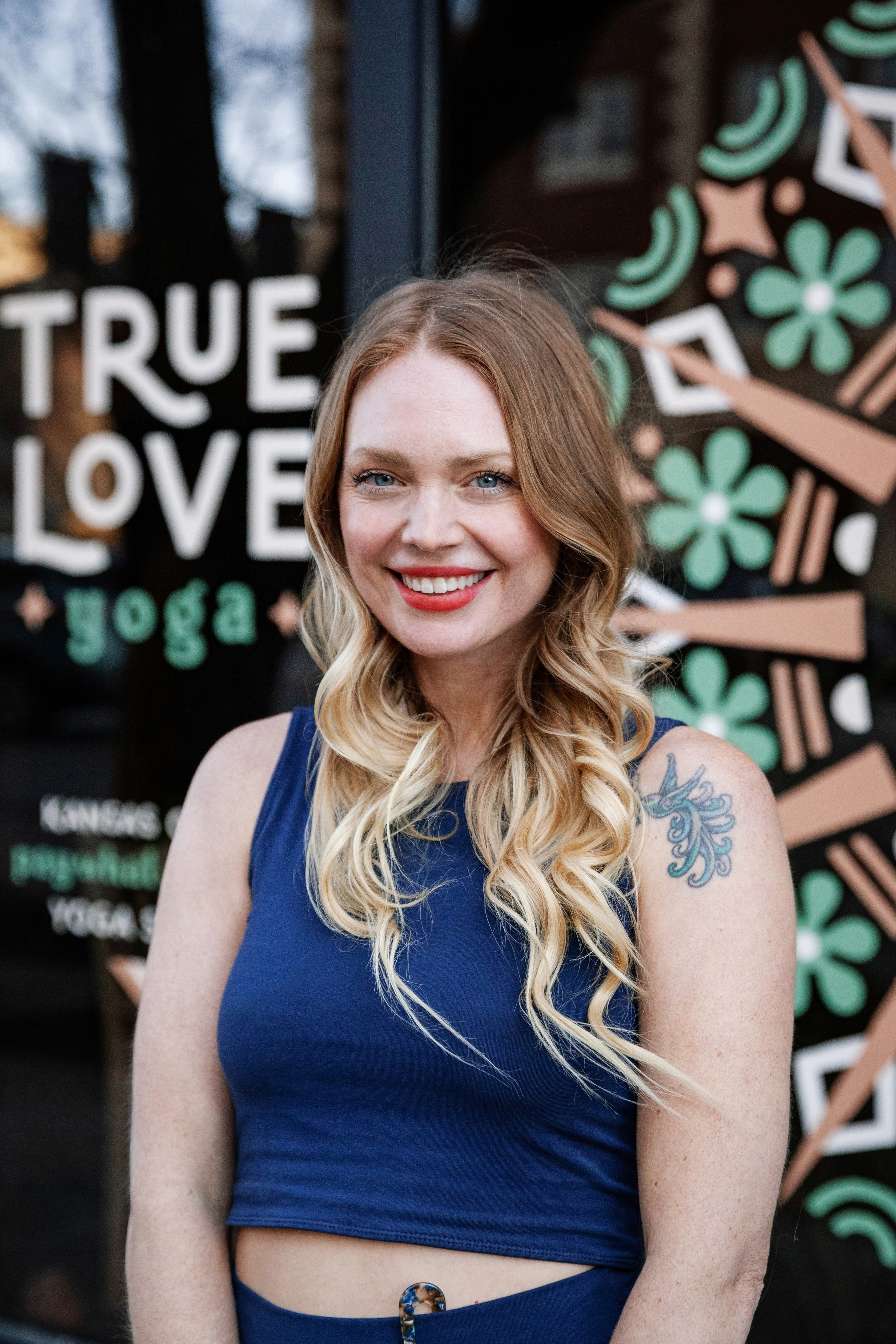
[00:00:11] Hello and welcome to Deep in your yoga practice. I am Lauren Leduc, the owner and founder of True Love Yoga in Kansas City, Missouri.
[00:00:19] Happy New Year.
[00:00:21] Today we are going to be welcoming in the new year by chatting about Sankalpa, which is the yogic way to begin again and start start with intention. This time of year can come with a lot of pressure to set resolutions to completely transform our lives, to get our ish together after the holidays. But I wanted to offer a softer and truer path today that feels more aligned and natural with the seasons. So today we're talking about Sankalpa, consistency and mastery.
[00:00:58] This also follows the year end episode that aired last. And if you'd like and you haven't listened to that yet, you can go through that. There are some really cool reflection prompts to help you close out 2025 so that you can open up 2026 with intention with me today. Instead of resolutions that fade by February, yogis begin the year with Sankalpa, which is an intention rooted in the heart instead of the ego. Let's go deeper into what is Sankalpa. Sankalpa is a heartfelt, a soul deep intention that is aligned with desire. It's not what do you want to do? But instead it's who do you want to be? What do you want to embody? This year, this differs from resolutions. Resolutions come from perceived lack. And Sankalpa comes from this space of wholeness, of alignment with our highest self, this self that already exists within us. It might just need a little bit of uncovering. Resolutions demand strict will, willpower. But Sankalpa actually invites in devotion. We are looking at what matters to us, what is our higher calling? Who or what are we devoted to? And we're aligning our behaviors with that. Resolutions also typically focus on fixing, but Sankalpa focuses on remembering who we truly are. Sankalpas are typically drawn from the Yoga Nidra tradition. So when we're practicing Yoga Nidra, by the way, I have a whole episode on that. We set a Sankalpa at the beginning, beginning this heartfelt resolution that through the Yoga Nidra process, we allow ourselves to embody. But Sankalpa originated from the wisdom body within yogic teaching, which is Vijnana, Maya kosha, this part of ourselves that embodies wisdom and intuition and higher thinking, and it reveals our deepest knowing when we are still so. Examples of Sankalpa might be something like, I live in truth, I choose steadiness, I honor my body, I cultivate joy. So they are spoken in present tense and in the positive. So it's not something like, I'm not going to do this this year. It is. I am already this choose steadiness. I cultivate joy. I am joy. So I'll invite you to consider what your sankalpa is for this year, for 2026.
[00:03:27] When you close or soften your eyes and you tune into your heart, what quality that is already a part of you wants to reawaken? What wants to emerge? What wants to be uncovered? For me, the word that I keep feeling into this year is mastery. So I might say something like, I am masterful. So think about what feels right or what resonates for you this year. Now, how do we maintain this sankalpa through the year? Let's talk about the path of consistency or abiyasa or practice. This relates to Yoga Sutra 113 and 114.
[00:04:07] Abiasa means sustained, consistent practice over a long period without break, and done with devotion and earnestness or enthusiasm. When we're talking about abiyasa, we want to know that consistency is a lot more important than intensity. So this is how we create sustainability through practice. I would rather show up for myself in small ways every day that cumulatively add up over the year than do like one really intense thing or one or two really intense weeks and then fully drop off. So abiyasa is not a concept that is about all or nothing. It's about small sustainable changes. So with abiasa, tiny actions lead to massive spiritual and personal growth over a long period of time. So we're not looking for overnight results here. We are looking for small incremental changes that matter in a lifetime. Mastery, which is what I'm seeking this year, is built through repetition, not through perfection. So when I say I am mastery, that does not mean I am perfect, but it sure as hell means that I keep showing up. Also, know that consistency feels quiet. It's not flashy. It's not really something we can show off. It's just something that we do on a regular basis, hopefully with some enthusiasm and devotion. So you might consider if your practice, or maybe the habits that you'd like to cultivate to align with this sankalpa are something that you can do every day or most days in small and consistent ways. So to do this, you might set the bar pretty low at first. Even five minutes counts. So say your sankalpa is I am peace. You might meditate for five minutes four times a week and grow it from there, rather than saying you're going to meditate for two hours a day. You also can pair habits with anchors. So for instance, after your morning tea you meditate or while you brush your teeth, you say your affirmations or while you're doing your bedtime routine, you journal. So what are the habits that align with your sankalpa and how can you easily fit them into your everyday? You can also create ritual spaces, so when you physically are in that space, it's a reminder to align with your sankalpa and to embody these habits. You can also track your practices gently. I have a yoga practice journal that I love. If maybe practicing yoga consistently is part of your sankalpa or your intention for the year, but you can also use your phone or habit trackers or a simple journal or notepad. I also recommend this phrase of don't skip twice. Of course we need breaks sometimes we need to honor rest, we need to restore.
[00:07:07] But don't skip more than one day in a row if you want to build the consistency. So take intentional breaks and then get back to it. Because sometimes getting back on the horse is hard and it becomes more and more difficult the longer of a break that we take. So give yourself that one day and then schedule your habit for the next day, whatever that is. Yoga class, exercise, journaling, meditation, et cetera. To me, being able to show up for yourself in small ways every day and to align with this truest part of yourself requires a sense of maturity. For me, I had an all or nothing mentality when I was younger, so it was really hard to formulate new habits and embody who I wanted to be as a person. But with a lot of practice and time and maturity, I've been able to embrace more equanimity and more consistency in a way that isn't flashy or exciting, but just as part of my everyday life and thus has become a part of who I am. So we can do this by pairing abhyasa or this consistent practice with viragia. And viragia is non attachment and or acceptance. That's the maturity to release expectation of outcome. So it keeps our sankalpa or intention from becoming rigid or perfectionistic or ego driven. It encourages a sense of softness around the process.
[00:08:38] The philosophy of yoga states this in so many different ways. But it's really important to continue showing up, to align with our ethics, to align with our swadharma, which is our individual purpose, but to also let go of the fruits of that. So we focus on showing up. We practice on the behavior rather than the results of that behavior so we can let go of this all or nothing mentality. We can let go of comparing where we are with where we, quote, unquote, should be. And we can let go even of timeline. Often growth isn't linear at all. And maturity is staying committed even when the results or are invisible or we feel like we're going backwards. Maturity is being able to let go of that, to zoom out and to see things from a bird's eye view at times. And that really comes from wisdom. When we're really young, it's really impossible to do that because we have so little data to work with. But when we're older, we really can zoom out and notice the different patterns that have occurred in our lives, have a little bit more trust in this growth process. At this point, I know that I'm going to probably bump into the same obstacles over and over, but every time I do so, it's from a different level. It's from a different level of maturity, a different level of experience, a different level of wisdom. And that gives me a lot of peace to endure difficult times with more grace and with more patience. A helpful metaphor here might be that in the winter the seeds are underground. There are typically no outer signs of growth. Yet life is happening invisibly. Dormancy doesn't mean death. There is still something going on behind the scenes, and there's still all of this potential underground that will grow in the spring. And when we have those moments of difficulty, it can be really tempting just to give up, to go back into that all or nothing mentality. But when we embrace abiasa and viragia, or practice and acceptance, we can see the bigger picture. We can keep showing up even when we aren't seeing those immediate results.
[00:10:58] And we can do it with joy and devotion. Coming back to my Sankalpa mastery, let's talk about this. What does it mean as a yogic path? Mastery actually is a mindset. It's not a result. It is this sense of depth rather than a sense of surface level achievement. And it is presence.
[00:11:19] It's who we are, not performance or what we do. Yogis cultivate mastery through repetition, through humility, through curiosity, and through swadhyaya or continued learning. So we continue studying the texts, we continue studying ourselves and life so that we can grow more wise and more humble at the same time. Because I think the wiser we get, the more humble we get as well. Because the more we learn, the more we realize how much we don't know. When we think of mastery in terms of modern life, we can think of maybe busy as not being the enemy. Because I think, you know, we've pointed a lot of fingers at busy. A lot of us have really busy lives and it can feel really overwhelming. But actually being in a dysregulated state all the time is. Mastery requires you to regulate your nervous system. Not for it to be perfectly regulated all the time, but to have the self study, to notice when you're dysregulated and to have tools to come back to over and over again to help bring you into your window of tolerance or into this state where you can tolerate your nervous system in a healthy way. So we can show up to our lives even in busy seasons and do it with a sense of grounding. You don't rise to the level of your goals, you fall to the level of your systems. So it's so important, yes, to set goals, to have maybe things that we envision for our lives, but also to show up every day and to have systems in our lives that work for us. Know that yoga is a system. So if mastery is my sankalpa, showing up to my yoga practice is the system.
[00:12:59] And sankalpa becomes a system when you live it daily. So how do we incorporate this alignment with our higher selves, of our intentions into our everyday habits, into our behaviors, into our thinking, into our interactions, actions, so that they just become this system that supports and enriches our everyday life. Now let's talk about how to set your Sankalpa for 2026. So take a moment and get still. You might tune into your breath, breathing into your heart, breathing out nice and slow.
[00:13:39] Take a moment to feel your body in your space, wherever you are, and ask yourself these three questions. The first is, what quality do I long to embody this year?
[00:13:53] The second is, what feeling do I want to cultivate more often?
[00:13:58] And the third is what inner truth is ready to surface once you've answered these questions? So you might pause this and answer, or you can look in the show notes to find the questions and take some time to journal. After this, you can create your sankalpa.
[00:14:16] And this is short, it's affirmative or positive, it's in the present tense and it is embodied. So some more examples are, I move with steadiness, I trust my inner wisdom, I choose spaciousness and then anchor it with a practice. This might be breath or meditation, asana, daily ritual, a journal entry, a mantra, some way to integrate this sankalpa into your own being. And then, of course, you'll want to consider what daily habits and behaviors you will need to show up to in small but important ways to embody this Sankalpa and then commit to yourself. Know that you are worth devoting yourself to.
[00:15:03] And if it's hard to commit to yourself, commit to something higher. Whether that's a higher power, whether that's a person who you love in your life or a cause that you love to support. Keep coming back to that sense of devotion that will light your inner fire and that will keep you going when things are difficult. I'd love to invite you to practice with me this year. In a previous episode, I talked about my Abiasa practice, which is this, this ritual, weekly practice on Sundays here at True Love Yoga. And it's a way to develop mastery and consistency and to show up for yourself and to show up differently too, every single week and to accept and embrace whatever you're bringing to your mat. Remember, as you show up to these practices, that community amplifies intention. And when we're together as a community, it helps provide accountability and clarity and energetic momentum. If your Sankalpa includes consistency or clarity or recommitting to your path, this class is an amazing way to do that. Along with all of our other amazing weekly classes at True Love Yoga, as well as our workshops, we offer on a regular basis our 200 hour yoga teacher training, our 300 hour yoga teacher training and beyond, we are here for you. We're here to become a system of support for your higher self. So to close, I want to thank you for listening to this episode and just send you so much love and encouragement and softness and spaciousness as you tune into this Sankalpa for the year and consider ways to embody this. Know that no matter what, you are already enough. And Sankalpa just helps illuminate the path ahead. Your Sankalpa is not something you have to strive toward. It's just something you return to again and again and again. So thank you so much for listening. I'm so excited for another year here with you. Please let me know any other areas where you need support, topics you'd like to learn more about, and ways you'd like to engage with our community.
[00:17:09] Thank you so much for joining me. Om Shanti Om. Peace.